Recently had an x-ray and an MRI done on my leg. My out of pocket cost was at least around $600. I'm not exactly sure what my health "insurance" covered. You never know what your insurance will cover until the bill arrives. What are my options? I don't have free choice. I have two plans offered by my employer. Shit and Shitty. Worse, they found nothing wrong with my ligaments. The x-ray was a waste. I was told to keep a "pain journal" of any specific movements and positions that cause discomfort.
Tear it down. I rather have the peace of mind that I am just covered no matter what, even if it means I pay a bit more in taxes. Let me focus on work and life. Not healthcare.
I do understand the problems this creates for a healthcare system organized around private insurance. I get this will have a negative impact on the economy by putting those companies out of work, but I'm deeply unsatisfied with this system. Even finding a doctor on my plan can be difficult.
The US system really needs to be torn down and rebuilt from scratch. Stories like this simply shouldn’t happen. There is almost no way as a patient to ensure your coverage is sufficient besides having a lot of money in case. It’s insane and hard to understand how anyone can defend this.
With the lack of information the patient has nobody should talk about free markets. A functioning market requires that all participants have information available for making a decision.
Honestly, a free market might even be better than what we have (though something like single-payer would be ideal). As usual, we have the weird half-assed worst of both works policy solution that comes from neither self-consistent solution being palatable to the electorate.
In my view a free market can only work if participation is optional. When you have a heart attack you can't really negotiate with the ambulance or the hospital. There needs to be some kind of regulations to keep costs in check. But I would advocate total price transparency so you can at least shop around before non-emergency treatments. Also, insured and uninsured patients need to be charged the same money.
> When you have a heart attack you can't really negotiate with the ambulance or the hospital
I mean, in some crazy alternate universe, this is exactly what insurance is for. I pay you a fixed premium ahead of time in exchange for you paying out the costs when it occurs.
Right, my comment probably made it sound like I'm more in favor of a free market than I am. The point I was making that what we have now has so many deep flaws that it's likely that a free market would still be better, and a lot of the price stupidity you describe can be traced back to regulation encumbrance. Also note that I'm assuming some level of baseline regulation on the order of other industries, just as single-payer would still have some market characteristics (like choosing doctors etc).
There is no such thing as a "free market". Markets are inherently unfree. Money-exchange-based economic systems do not form without significant centralization of power. Also, and regardless - once such an exchange-based economy ("market") forms, wealth in general and capital in particular tends to get concentrated, and the market manipulated and slanted even relative to its own internal ideology.
So, a "free market" of health care would just be a reshuffling of the oligarchic arrangements.
But the market could be a lot freer than it is now, most issues with USA's healthcare would disappear if it was easy to open up a cheap hospital using doctors educated in Mexico in order to serve people who currently can't afford healthcare. Then suddenly the established doctors and hospitals would be forced to motivate their much higher costs, creating competition which is good for the system. Some rich people will probably choose the more expensive option still, but most poor and middle class people are probably fine with foreign level doctors.
This is not like consumer goods where bad quality of something you bought won’t kill you. We still need safety standards, otherwise the country will be flooded with quack doctors who are cheap but also hurt people.
> [US healthcare] needs to be torn down and rebuilt from scratch...
Here are some numbers, just to provide perspective: [1]
The worst recession in recent history (2008-09) featured a drop of US GDP by -2.5%.
The US healthcare spending per capita is about twice as high than EU average.
US healthcare spending is about 17% of GDP.
Which means if we somehow manage to fix it and bring it to average European levels, that would represent a drop of -8.5% GDP
We haven't seen GDP drops like this since WW2.
So... I seriously doubt "rebuild from scratch" will work. We need a gradual, systematic cost cutting program spread over 10-15 years. And why aim at EU average? Let's make it the world's most efficient, while we're at it.
[1] quoting from memory, feel free to google & correct me
Torn down by whom? There is a whole system of laws and companies and staff that would object to such a dictatorial move.
We agree that it’s fucked. We likely disagree on where it needs to go, and possibly on how it needs to get there.
Actionable steps to improve are what is needed, especially now that stance on healthcare regulation has become a point of political identity in the USA.
I think it will probably get worse before it gets better.
FWIW, I agree totally on the lack of information part. The current system is the worst possible setup.
60% of Americans believe the government (in some form) should ensure healthcare for its citizens (per Pew Research). 70% of Americans support Medicare for All. We’re going single payer (Medicare For All), it’s just a matter of when (the younger you are, the more you’re likely to support it).
What many people don't realize is that the majority of new medicine is patented and created in the US. Once it's released, governments that have socialized health care create generics and get around these costs, mostly because they don't have to put any money into R&D.
The world of medicine will be in trouble without our system, because govetnments are really not that good at innovation.
Socialized medicine is great for simple checkups, but breaks down as you get older and need major surgery.
I really don't want the government making these life or death decisions.
So you prefer that private for profit companies make the life and death decisions for you. Interesting. In my experience, they are much more likely to kill you by denying coverage as, unlike the government, they have every incentive to do so (profit) and no incentive not to. This is what's happening right now. It happened to someone very close to me and believe me, if you or a loved one end up in that situation, you'll regret it dearly when you or them die due to some corporation that will use that money to pay a CEO to buy a new Lamborghini rather than saving your life or the life of a loved one. You clearly have no idea what kind of immoral system you're defending.
>The world of medicine will be in trouble without our system, because govetnments are really not that good at innovation.
Medicine is not like building a factory, completely different capital model for Medicine is about "discovery" there is a universal truth out there (yes there is differences in genes not making it perfectly universal) , and advances in medicine is figuring out this discovery.
It actually appears most of our medicine discoveries use basic research that is governmentally funded and not privately funded.
Pretty much you are applying top down ideology that government is bad no matter the situation or context.
I`m applying top down ideology because I've never seen a socialized government industry out-compete any private pharma company by coming up with new/innovative medicine.
The reason is because you need to risk lots of money for R&D well beyond "basic research" and historically, governments arent nearly efficient enough to accomplish this.
Private industry/the free market is the perfect way to do this and historically has proven itself over and over again.
Another problem is that FDA approval takes over a decade and many billions of dollars. We need to find a way to improve this, without sacrificing quality.
A couple of good examples of the free market working in the free market is LASIK eye surgery. 20 years ago it was thousands of dollars. Competition brought it down to less than $500.
You don't get this natural competition with the government monopolizing healthcare and price fixing.
We all win with more competition, and government-run healthcare is the exact opposite of this.
If we all win with more competition, why do so many people have to declare bankruptcy in the US from medical bills? Why are millions of people uninsured or underinsured? Why are prices so high for medical services in the US vs other first world countries with universal healthcare, while outcomes are worse?
"Socialized medicine is great for simple checkups, but breaks down as you get older and need major surgery"
That's a very odd statement - at least in the US - because health care for the elderly is paid for through Medicare. It's done that way because the elderly are more-or-less uninsurable due to the high costs of providing care. In other words, the US's free-market-style health care only works for the elderly because it's socialized.
Private insurance makes those decisions already (care rationing), as does the government when you’re on Medicare (government run healthcare with very high approval ratings from those on it [per Gallup and AARP]).
You’re hand wringing over a system that is already here, and your fears are unfounded. If you want more drug R&D, up the funding for the National Institute of Health; it’s then publicly owned, and you’ve cut out yet another middleman (drug companies).
> Socialized medicine is great for simple checkups, but breaks down as you get older and need major surgery
I'm going to have to ask for a source on this, it sounds like BS.
> I really don't want the government making these life or death decisions
I really don't want for-profit private corporations making these life or death decisions. History has shown that when corporations get to choose between life and profits, they choose profits.
Trying to make this into an IP issue is bizarre. Most new, patented drugs are "me too" drugs that are just sufficiently different from existing drugs to achieve the patent. Doesn't cost much in R&D. Occasionally you'll get advances here and there -- a lot of them funded by government grants, though. (Not sure if you want to count that as government innovation, when they're not government employees, or just government-funded innovation.)
The biggest costs in bringing a new drug to the market aren't in R&D, but in gaining the FDA's approval (which is similarly arduous even in the "me too" drug cases) and in advertising. Here, a small snapshot of just one segment of the health industry: https://slatestarcodex.com/2019/05/22/the-apa-meeting-a-phot...
Makes sense to go single payer (and I tend to be pretty libertarian over all). Insurance is about having a pool of payers large enough for offsetting costs. The larger the pool in a nation with population growth the higher probability that a larger pool will be better. The largest pool is everyone.
I don’t like calling it a human right. That implies the doctors are enslaved to provide care. No rational and highly intelligent person will pursue medicine as a career if it’s going to require 12 years of education before conscription into unpaid labor.
> I don’t like calling it a human right. That implies the doctors are enslaved to provide care. No rational and highly intelligent person will pursue medicine as a career if it’s going to require 12 years of education before conscription into unpaid labor.
That's a ridiculous Shapiro-esque take. Are programmers enslaved by accessibility requirements? Are constructors and building owners enslaved by handicapped bathrooms and wheelchair ramps? Not to mention, the thing you're describing already exists and is one of the least controversial parts of healthcare. Doctors are required to provide care, even above and beyond the Hippocratic oath. They cannot discriminate against their patients in many circumstances. Generally this is agreed to be a good thing.
Healthcare as a human right does not mean that people are forced to become doctors and forced to provide care. It means that the available care should be distributed to everyone, just like the ADA means that available resources must also be distributed to give some level of equity to people born with disabilities. All humans deserve an equal footing, and should not be responsible for bad things happening to them which are not their fault. Disabilities are an obvious and clear example of that. Healthcare is similar.
I have no particular stance on healthcare as a human right but you're being atrociously uncharitable in representing it.
Somehow other countries have figured it out. Europe has a wide variety of systems from mostly private to completely public but none is even remotely as insane as the US.
I like your argument, my only concern is that the government also operates the VA and the DMV which doesn't give me much confidence. The problem is also on the cost side of things. Hospitals charge astronomical for basic things like saline solution ($595 with insurance from personal experience). We have to get costs down because both of these industries are enriching themselves by privately negotiating rates.
Of course they would be paid, just like doctors are paid everywhere there's universal health care available.
Access to a functioning justice system, as it ensures everyone access to laws, is arguably a human right, and yet no one ever says police, judges, or public defenders are slaves. Why is health care different?
Even the bronze plan (which was always compliant) is terrible, though.
Depending on the state and plan, but it’s around $400/month and $7500 deductible for a single adult, so you’re paying more than $12k out of pocket before you get anything, except some very basic preventative care.
Not true. Even the bronze plans cover doctor visits with just copays, no deductible to be met. Copays count towards deductibles.
Now when you need hospital services, surgery, emergency, yes the deductible is formidable. After that they cover at some amount, 80% typically.
So the notion you have to pay $12k first is a blatant lie.
The bronze plans are akin to what low end employers used to/still offer. It’s better than nothing, for example in the scenarios listed in the article, max out of pocket would be their total liability, probably about $12k as you noted.
None of this is good, but it’s better than plans literally designed to scam people. That’s what the “short term healthcare” being proffered is. Scams.
I said “except some very basic preventative care.”
So you’re paying $12k/year for a 30m checkup and potentially still have to shell out $30 for a copay. Not sure why that doesn’t illustrate my point exactly.
Aren't you paying for insurance against the exact same thing that happened to the couple in the linked article?
You're paying for coverage against a $250K bill for an unexpected health problem, not coverage for routine care.
I've paid for car and home insurance for over a decade, but have gotten no paying from either, but that doesn't mean that I haven't gotten value out of it. I'd still purchase that insurance even if it weren't required.
Well again, you’re illustrating how screwed up American healthcare is. The reality is that most Americans need varying levels of routine care (vs insurance against catastrophic events only), and a system where healthcare is accessible via insurance instead of a system of universal healthcare doesn’t make sense for something that you need to access routinely.
No doubt, the American healthcare system is completely screwed up, I'm just pointing out that catastrophic healthcare insurance is not worthless. Unless you are completely destitute and have no assets that you can lose to pay off catastrophic medical bills, it may very well be worth the high cost.
(assuming that it actually pays, unlike the insurance in the linked article)
Guaranteed strategy for a progressive wave 2020 and a democratic president. Expect massive executive action to address climate change and end corruption. There's nothing more evident than the greed of the insurance companies, it cuts bipartisan. Finally the hope of adults in the reigns again
I'm a proponent of universal healthcare, but pointing to "insurance industry greed" is a dishonest narrative. Health insurers are having a banner year, and that means their profit margins are approaching 6%. (By contrast, Facebook is regularly over 40%.) For the year ending Q3 2018, health insurer profits amounted to $25 billion, industry wide, which is about the same as Google alone makes in a year.
If running a business that makes 6% profit margins is "greedy" then the word literally means nothing. The only reason health insurer profits are even part of the discussion is because Democrats reflexively lean to anti-corporatism to explain any societal problem. But it's like republicans blaming everything on the decline of two-parent households. It's rah-rah narrative that has no basis in reality.
The profit margin is irrelevant when they lobby against proper regulation and against allowing the government to negotiate prices. It's especially irrelevant when they deny coverage and kill people to get that profit. These companies have no business existing without proper regulation, if at all. If the regulation puts them out of business so be it. But as we can see from other countries in Europe, that's not necessarily the case. Murder is not moral regardless of whether you make 6% or 40% profit off of it.
Does the fact that people might die create an obligation to run your business like a charity?
What even is your moral theory? That a company that makes 6% profits saving lives is evil, but a company that makes 40% profits and doesn't save any lives in the process is not evil? Apple makes laptops that, for the price of a single one, could save someone in Africa from malaria. The opportunity cost of every MacBook Pro is a death in Africa. If there is an affirmative obligation to save lives, how evil is Apple?
This is an incoherent--but extremely common--ideology. It would be one thing if these people followed their ideas to the logical conclusion. It's evil for anyone to make more than 6% profits because that money could be spent saving lives. But it makes no sense to impose that moral obligation on a selected group.
With Instagram contributing to a decline in young adult mental health[1] perhaps Facebook should be taxed so their profit margins drop down to similar levels as health companies.
An insurance company should be operating at cost though. They should all eventually compete on the lowest prices until someone reaches close to operating cost. It should be a race to the bottom.
Also, part of the costs are related to inflated health care and med costs. Because insurer can pay more, health care can charge more. Their profit should come from them working to lower those prices, not from lowering their coverage.
No, economic theory says that perfectly competitive industries will operate at a nominal profit, not at cost. A 6% profit margin is probably not quite "nominal profit," but is below the average for all industries: https://www.forbes.com/sites/sageworks/2016/10/03/the-15-lea....
I consider nominal profit to be pretty much "at cost", that's why I said "close to operating cost". OPs 6% number is neither. Your link even clearly demonstrate that, by listing 14 industries all with smaller margins and showing the average to be 7.7%, making 6% profits a farcry from nominal profits.
The problem I'm afraid isn't the 6% margin, but the regulations that inhibit a truly competitive insurance market. To start with, state-based insurance is a legacy that makes no sense today.
I'll gladly pay 6% if insurance companies went to bat on cost instead of half-colluding with providers, and innovated.
I agree with you, I believe there are even laws in place that prevent Medicare and Medicaid from negotiating on price. We're far from a free market utopia here. I'd be curious to hear some of the rational our downvoters have for downvoting us, hopefully some will leave a reply doing so.
If Democrats in California can't muster the votes to outlaw something as uniformly hated as balance billing while they have the Governor's office and a supermajority in both houses, I'm afraid I don't have much faith in their ability to fix any of this at the federal level.
Everybody likes a simplistic explanation of the high cost of health care like "blame the insurance industry" but the reality is more complicated. Yes they are middlemen and need to make profits which adds cost. But look at doctor salaries, particularly specialists, many of whom make over $1m/yr. Look at testing costs, often run by private companies (sometimes owned by the doctors who order the tests) that also need to make a profit. Look at the costs of hospital and hospital systems whose administrative and facilities costs rival that of higher education. And not to mention the whole pharmaceutical-industrial complex. Reducing healthcare costs is going to have to happen at the input side of the industry, not just by taking out payer inefficiencies.
IDK, the last "progressive" action on insurance more than doubled my rates and I had a distinct feeling of some kind of corruption like insurance companies were cashing in.
> IDK, the last "progressive" action on insurance more than doubled my rates...
Sounds like you might've had one of the useless plans cited in the article. Sure, they've got low rates - they don't cover anything when you actually need it.
Obamacare was better than nothing but it really avoided all difficult issues so I think it was a bad law. Problem is that the republicans want to make it even worse.
Right now I’m for Medicare for All. This seems to be the most sane and possible approach.
I had a plan that covered inpatient care 100% after my deductible. Tests, doctor visits, etc., weren't covered. My HSA and other savings were fine for that. Along came thr ACA and killed it. My premiums skyrocketed and my money went into premiums instead of savings or investment.
I live in Ohio. I had this plan from 2003 to 2014. I paid a bunch of stuff out-of-pocket over the years. I also saved a lot of money in my HSA and paid off debts. Had I been paying the kind of premiums I paid from 2014 to date all those years I would have far less net worth.
The shitty plans work out really well for folks who don't wind up needing them. That's how they succeed - 90% of people are satisfied customers!
The problem is, it's like having car insurance that'll only pay out $100 if you have an accident. Fine if you never have one, but not if you do. They give you the illusion of insurance.
Absolutely. And we should have just gone to a single-payer system. Instead we have this useless compromise that further transfers wealth from the middle class to the rich. I don't want what I had back, but I don't want what we have now either.
A single-payer system will require significantly more taxes, and those taxes will come out of your pocket. Which is exactly why we'll never get a single-payer system. Everybody wants better this or that, but nobody wants to pay for it. Which, in a nutshell, is precisely what your rant amounts to.
Here's the a rundown of what single-payer would cost in California:
* $400 billion total (2x the entire existing California budget)
* $200 billion in additional expenditures (the first $200 billion being covered by what people, employers, and state and federal programs already pay)
* "Under one scenario, the average statewide sales tax rate would have to jump from 8.5 percent to nearly 37 percent to generate the amount of revenue needed. Under another, California would have to create a new 15 percent payroll tax, withholding $150 from a $1,000-a-week paycheck."
So, yeah, good luck with that, considering that we can barely keep the ACA alive. Ofcourse you paid less before the ACA. It's a fairly safe assumption you were a healthy, young or middle-aged person without any pre-existing health conditions. But one day that will change; hopefully your fellow Americans won't be as indignant about having to fork over more money to benefit someone else.
Perhaps you were paying more than what other people in other states had to pay (for example, in California premiums never really went up much), but whatever the amount you were paying more to subsidize healthcare for others who previously didn't have it or had too little of it. If you think this country is going to get single-payer without you paying significantly more....
And even if you were okay with that, 40-50% of Americans aren't okay with any tax increase. The amount of Americans willing to vote for a 10-20% across the board tax increase is probably in the single-digits. So no matter how many people want a better system, even more more people have a stronger aversion to more taxes. (The overlap is, of course, enormous.) It's irresponsible to advocate for a system that isn't politically viable. Just like the previous broken system, and just like with the ACA today, it will fail unless and until people are willing to accept more taxes or, at a minimum, commit to the existing system and make the best of it by refining it. (BTW, single-payer is the exception across Western Europe and Japan, the very same places Americans love to point at as better models.)
As a practical matter, the ACA went as far as it could in terms of costs that could be covered without a significant raise in taxes, and in retrospect it was overly optimistic in our ability to cut costs. Of course, many people--particularly healthy people--were taxed in hidden ways, such as you were. And, FWIW, the huge increase of premiums in certain states could be fixed by those states. For one thing, they could make the exchanges easier, as well as offer better state-funded healthcare. These are two reasons why premiums never really went up much in California with ACA. But if you're not willing to make it work in your state, why should I assume you, as a fellow citizen, wouldn't be equally lazy and cynical when we have to make even more difficult decisions on a national scale?
Everybody has answers. And every politician is making promises. I'm sure the proposals from candidates like Bernie Sanders are theoretically fiscally possible, but only if you vanished 80% of Americans, replaced them with French and Canadian citizens, and then did the same for our healthcare infrastructure.
Politics is the art of the possible. Ideas and promises aren't worth squat. That's the problem today--every grand idea and promise is an excuse to turn our backs from resolving the hard problems; problems that would also need to be resolved for those grand ideas to have a snowflake's chance in hell of delivering; problems that once resolved would make the existing system infinitely more tolerable without having to go through a revolution.
> A single-payer system will require significantly more taxes...
We know this isn't true. The rest of the developed world spends about half what we do per-capita on healthcare, including their taxes.
We pay almost as much in taxes as they do already. We just do it tremendously inefficiently. (Or efficiently, if you consider the goal to be shuffling money off to rent-seeking middlemen.)
I am willing (desiring, even) for my money to go toward building a social safety net. Right now my inflated premiums aren't doing that. I would much rather pay taxes as a hedge against the fear of lack or loss of coverage that I have now. (Especially since my ability to hedge with savings has been completely obliterated by the continued spiral of cost increases for medical goods and services.)
I also think single-payer is our best shot at getting spiraling costs under control.
You can get a cheap (like $10) EU-wide health insurance with wide coverage, or get a refund from your country after getting healthcare in another member country but it's quite the bureaucracy. (That's where the insurance company helps.)
Now even if paying from out of pocket, the cost is unlikely to bankrupt you. The expensive things are experimental biological therapies (e.g. new antibodies) and some cancer treatments.
As for quality, it depends, e.g. Poland has the healthcare starved for money and qualified people. That's because it's way too small bit of GDP. (I think around 5%.)
That mostly makes specialist care much slower, not the general care, and hospital workers overloaded. Cost cutting is visible everywhere.
(Only Romania and Bulgaria are more starved.)
It's still much better than US situation.
As a number, it is around 700 Euro per year per capita. And the money is supposed to increase to some 6% gradually.
"Apparently EU citizens (and visa holders?) get a healthcare card that's portable across EU. Is this true?
"
I don't think so. The systems are very different. But if you get sick in another country they won't rip you off like they doing in the US. My sister from Germany was charged $1200 when her daughter had a fever in NYC. She talked to a doctor for 5 minutes and got an antibiotic.
There is no wisdom to impart. There are 2 countries in the world who do not have public healthcare: the US and Liberia.
The US does not have public healthcare because of a lack of wisdom, it’s because of greed. Literally anything other than what you’re doing now is better. Roll the fucking dice on public health policy and it will be better than what you have now. It’s not a lack of wisdom, you aren’t even listening to the wisdom that surrounds you, it’s a complete lack of empathy for the sake of greed!
Admittedly, I’m having a hard time finding the source for my claim. I read it a few years ago and can’t find the source.
But I did go looking for it! And what I found was that there are many people trying to muddy the definition of public healthcare. Sorry I mean universal healthcare. Actually, I mean single payer healthcare systems. No wait, I mean private-public!
Fuck it, “the healthcare system that doesn’t fuck over it’s patients”. That one. There’s only two countries who’s healthcare system still fucks over it’s patients.
If Syria, a barely functioning war-torn country, can run a public health system, so can the US.
I just DDG’d this because it sounds like a great idea but I wouldn’t sign those “five core statements of belief, freedom, and ethics” even if it meant I’d get free healthcare. One thing I know for certain: our health insurance system needs less religious involvement if we want to fix it, not more.
Well historically religious organizations have resisted providing adequate coverage for women’s health. So yes, religious affiliation often does impact the quality of coverage.
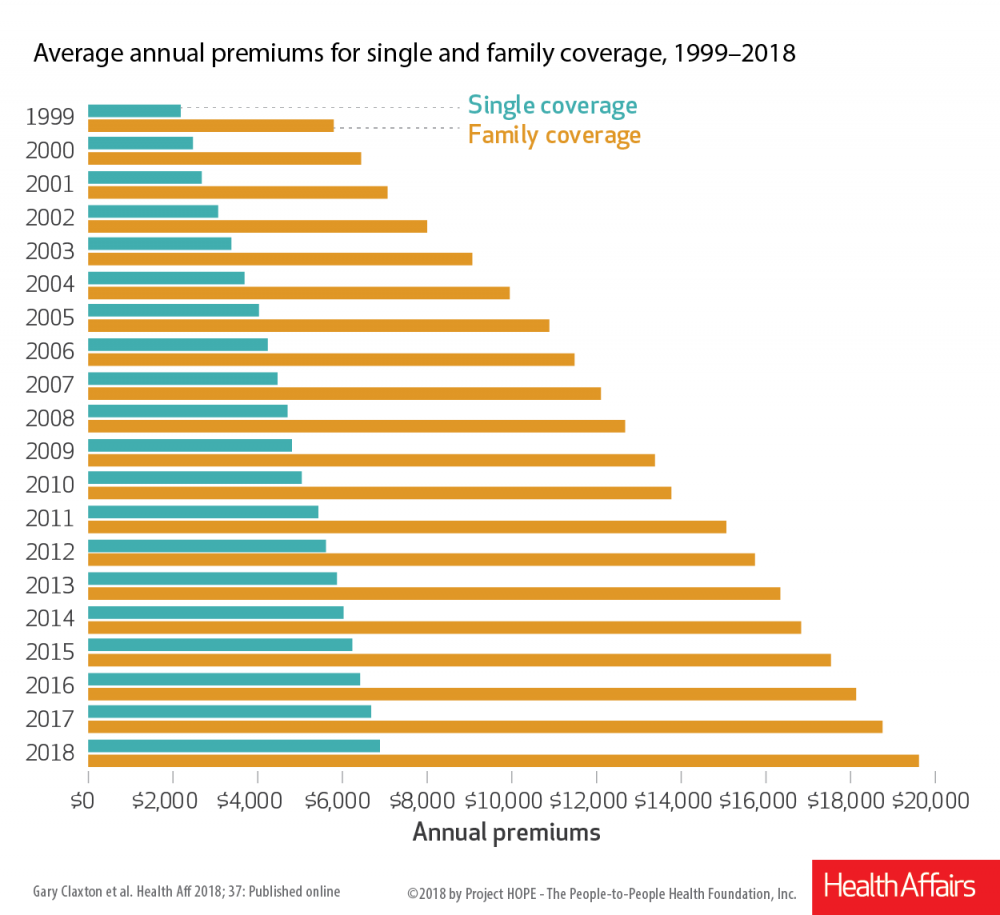
What I know is that before ACA, my health insurance was about $150 a month. Now it’s $650 a month. I can’t afford to subsidize other people’s bad choices and inability to pay. Health insurance should not be robbing Peter to pay Paul, we should return to an open market place.
Is the ACA responsible for the rise? Personally, my health insurance rates (for a family plan offered through my employer of ~1,000 people) were increasing by 5-10% per year before the ACA and have been more stable since (3-5% increases per year).
Its currently at a total of $22,000/year (between employer and employee contributions) - that's equivalent to $35,000 dollars in my country of birth (New Zealand), or 700% of what the total tax on the median income is. Somehow, kiwis get all of the functions of government for 14% of what health insurance costs in America. It's insane and reminds me every enrolment season of how poor the ROI on healthcare dollars is in the US.
Before ACA you couldn't get insurance if you had preconditions and they would often drop you if actually got sick. ACA needs improvement but things sucked long before.
You're not paying for that through premiums, taxes are. Your increase is due to the cost of care increasing, blame your doctors and their MBA-run hospitals charging $500 for a 10-minute office visit.


Tear it down. I rather have the peace of mind that I am just covered no matter what, even if it means I pay a bit more in taxes. Let me focus on work and life. Not healthcare.
I do understand the problems this creates for a healthcare system organized around private insurance. I get this will have a negative impact on the economy by putting those companies out of work, but I'm deeply unsatisfied with this system. Even finding a doctor on my plan can be difficult.