I’m an array language novice but my favorite one so far is BQN. Much better documented than K derivatives. Not sure you could characterize any array language as having a “healthy userbase” though.
For any other array language novices, I've experimented with K and J but had the best experience so far with BQN. It is a bit on the Lispy side like K but much better documented, and I thought the APL-esque symbolic alphabet was mnemonically helpful enough while reading code to justify learning an editor keyboard integration. (Plus it's fun.)
I once saw an explanation which I can no longer find that what's really happening here is also partly "man" and "woman" are very similar vectors which nearly cancel each other out, and "king" is excluded from the result set to avoid returning identities, leaving "queen" as the closest next result. That's why you have to subtract and then add, and just doing single operations doesn't work very well. There's some semantic information preserved that might nudge it in the right direction but not as much as the naive algebra suggests, and you can't really add up a bunch of these high-dimensional vectors in a sensible way.
E.g. in this calculator "man - king + princess = woman", which doesn't make much sense. "airplane - engine", which has a potential sensible answer of "glider", instead "= Czechoslovakia". Go figure.
I respect the forecasting abilities of the people involved, but I have seen that report described as "astonishingly accurate" a few times and I'm not sure that's true. The narrative format lends itself somewhat to generous interpretation and it's directionally correct in a way that is reasonably impressive from 2021 (e.g. the diplomacy prediction, the prediction that compute costs could be dramatically reduced, some things gesturing towards reasoning/chain of thought) but many of the concrete predictions don't seem correct to me at all, and in general I'm not sure it captured the spiky nature of LLM competence.
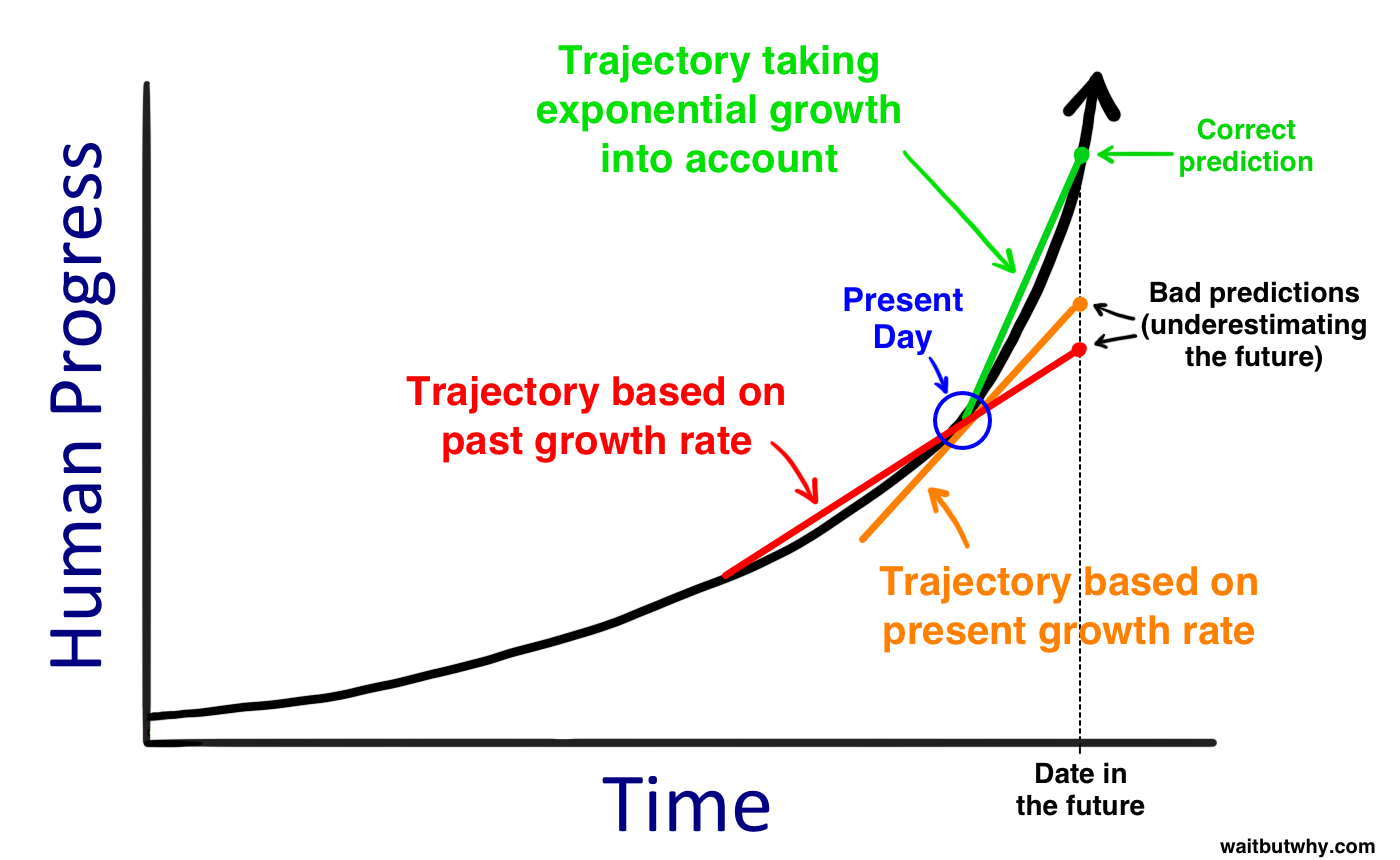
I'm also struck by the extent to which the first series from 2021-2026 feels like a linear extrapolation while the second one feels like an exponential one, and I don't see an obvious justification for this.
Plenty of people are ragging (justifiably) on Clean Code, but I really admire by contrast Ousterhout's commitment to balanced principles and in particular learning from non-trivial examples. Philosophy of Software Design is a great and thought-provoking read.
I wonder how much of this is an illusion of precision that comes from pattern matching on content from filler sites like https://www.free-hosting.biz/division/16-divided-7.html (I do not recommend clicking the link, but the result appears there).
I was thinking the same thing, especially as we are talking about division, and the result is "correct" for 16/7 to a great number of digits.
See also the "x = x + x three times", for which the result is not random but the result for the same thing... Two times instead of three (so result/2). That heavily smells like it has read sites that had nearly the same code on them.